


If your dentist has mentioned dental crowns or bridges as a treatment option and you left the appointment feeling a little unclear about the difference between the two, you are in good company. These are two of the most commonly recommended restorative dental treatments — and they are also two of the most frequently confused. Both involve a custom-made tooth-colored restoration. Both are fixed permanently in place. And both are used to address damaged or missing teeth. But they work in very different ways and they are designed to solve very different problems.
Understanding the distinction between crowns and bridges — what each one is, when it is used, and what the treatment involves — is genuinely useful knowledge for anyone who wants to make an informed decision about their dental care. This guide breaks it all down in plain, straightforward language so you know exactly what your dentist is talking about and what to expect if either treatment is recommended for you.
What Is a Dental Crown?
A dental crown is a custom-made cap that fits over the entire visible surface of an existing tooth — from the gum line up. It completely encases the natural tooth beneath it and is permanently cemented in place, restoring the tooth’s original shape, size, strength, and appearance.
Crowns are used in a wide range of situations. They are placed over teeth that have been significantly weakened by decay, fracture, or previous large fillings that have left insufficient healthy tooth structure to function reliably on its own. They are used to protect a tooth following root canal treatment, which can leave the tooth brittle and vulnerable to fracture. They are placed over dental implants as the visible tooth replacement component. And they are used cosmetically to improve the appearance of teeth that are severely discolored, misshapen, or disproportionate in size.
The crown itself can be made from several different materials — porcelain, ceramic, metal, or a combination of porcelain fused to metal. For teeth in the visible area of the smile, all-ceramic or all-porcelain crowns are most commonly used because they most closely replicate the color, translucency, and light-reflecting properties of natural enamel. Your dentist will recommend the most appropriate material based on the location of the tooth, the forces it needs to withstand, and your aesthetic preferences.
Getting a crown typically involves two appointments. At the first appointment the tooth is prepared by removing a small amount of enamel from all surfaces to create space for the crown to fit over it without looking bulky. An impression or digital scan of the prepared tooth is taken and sent to a dental laboratory where the crown is custom-fabricated. A temporary crown is placed to protect the tooth in the meantime. At the second appointment the permanent crown is fitted, checked for fit and bite, and permanently cemented in place.

What Is a Dental Bridge?
A dental bridge is used to replace one or more missing teeth — not to restore an existing tooth. As the name suggests it literally bridges the gap left by a missing tooth, using the teeth on either side of the space as anchors to support a false tooth — called a pontic — suspended between them.
A traditional dental bridge consists of two crowns placed on the teeth immediately adjacent to the gap — known as abutment teeth — with one or more pontics attached between them. The whole structure is fabricated as a single unit and cemented permanently in place. Like a crown a dental bridge is fixed and non-removable — it does not come in and out like a denture.
Bridges are a well-established solution for replacing missing teeth and have been used successfully in dentistry for decades. They restore the ability to chew and speak properly, prevent the remaining teeth from drifting into the gap over time, and maintain the shape of the face by preventing the bone changes that accompany untreated tooth loss. They are also a faster solution than dental implants in cases where the adjacent teeth already need crowns — since those teeth need to be prepared regardless, the bridge simply uses them as anchors without adding significant extra treatment.
The process for getting a bridge is similar to getting a crown. The abutment teeth on either side of the gap are prepared by removing enamel to make room for the crowns that will anchor the bridge. An impression or digital scan is taken. A temporary bridge is placed while the permanent one is being fabricated. And at the second appointment the permanent bridge is fitted and cemented in place.
Crown vs Bridge — The Key Differences
The fundamental difference between a crown and a bridge comes down to what they are designed to do.
A crown restores a tooth that is already there — damaged, decayed, or structurally compromised — by capping it completely. The natural tooth root remains in the jaw and continues to stimulate the bone beneath it.
A bridge replaces a tooth that is no longer there — filling the gap with a false tooth supported by the adjacent natural teeth. Because there is no root in the gap the bone beneath the pontic is not stimulated and will gradually resorb over time — a consideration worth discussing with your dentist when evaluating your options.
What About Dental Implants — How Do They Compare?
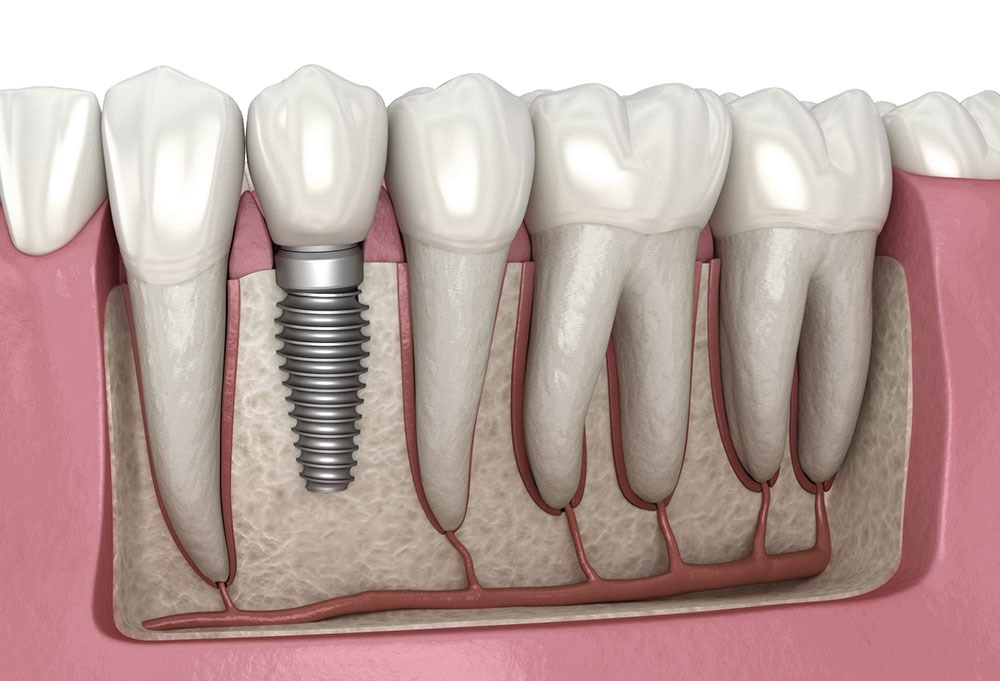
When discussing bridges as a solution for missing teeth it is important to mention dental implants in Agoura Hills as an alternative worth considering. A dental implant replaces the missing tooth root as well as the visible crown — by placing a titanium post directly into the jawbone and attaching a custom crown on top once the implant has integrated.
The advantages of implants over bridges for replacing missing teeth are significant. Implants preserve the jawbone beneath the replacement tooth by stimulating it just like a natural root — preventing the bone loss that occurs beneath a bridge pontic. They do not require the adjacent healthy teeth to be prepared or altered in any way. They function completely independently and do not put any additional load on neighboring teeth. And they have an outstanding long-term track record — with survival rates exceeding 94% at 10 years in well-selected patients.
The primary advantages of a bridge over an implant are cost and time. Bridges are generally less expensive upfront and can be completed in two appointments without the surgical procedure and healing period that implant treatment requires. For patients whose adjacent teeth already need crowns for other reasons a bridge may also be the more efficient choice since those teeth need to be prepared regardless.
The right choice between an implant and a bridge depends on your specific situation — the health of the adjacent teeth, the volume of bone available, your overall oral health, your budget, and your long-term goals. This is a conversation worth having in detail with an experienced cosmetic dentist in Agoura Hills who can assess your individual case and give you a genuinely honest recommendation.
How Long Do Crowns and Bridges Last?
Both crowns and bridges are designed to be long-lasting restorations. With proper care and regular professional check-ups both can last 10 to 15 years or more — and in many cases significantly longer.
The factors that most influence the lifespan of a crown or bridge include the quality of materials used, the skill with which the restoration was fabricated and fitted, and how well the patient maintains their oral hygiene. Brushing twice daily, flossing carefully around the crown margins and under the bridge pontic, and attending regular professional cleans are all essential for maximising the lifespan of these restorations.
Patients who grind their teeth place significantly higher forces on crowns and bridges than those who do not — and are advised to discuss a nightguard with their dentist to protect their restorations from premature wear or fracture.
When Is a Crown Needed vs When Is a Bridge Needed?
The decision between a crown and a bridge is not something that can be made based on a general guide alone — it depends entirely on your specific dental situation. However as a general rule of thumb:
A crown is most likely needed when:
- A tooth has been significantly weakened by decay or a large filling
- A tooth has cracked or fractured but the root is still healthy
- A tooth has been treated with a root canal and needs protection
- A tooth is severely discolored or misshapen and cosmetic improvement is desired
- An implant needs a visible tooth restoration on top
A bridge is most likely needed when:
- One or more teeth are missing and the adjacent teeth are already in need of crowns
- Dental implants are not suitable or desired
- A faster, less invasive solution to tooth replacement is preferred
What About Cosmetic Considerations?
Both crowns and bridges can be fabricated to look completely natural — matching the color, shape, and size of the surrounding teeth with remarkable accuracy. Modern all-ceramic and porcelain materials have advanced to the point where well-made restorations are virtually indistinguishable from natural teeth in everyday situations.
If you are considering crowns or a bridge for teeth in the visible area of your smile and you have other cosmetic concerns — staining, chips, gaps, or uneven teeth — it is worth discussing the full picture with your dentist before committing to treatment. In some cases a broader cosmetic treatment plan that includes options like porcelain veneers in Agoura Hills alongside crowns or implants may deliver a more comprehensive and aesthetically cohesive result than addressing each concern in isolation.
The Bottom Line
Dental crowns and bridges are both excellent and well-established restorative treatments — but they serve different purposes and are appropriate for different situations. A crown restores a damaged tooth that is still in place. A bridge replaces a tooth that is missing by spanning the gap between the adjacent teeth. Understanding the difference helps you have a more informed and productive conversation with your dentist about which treatment is right for your specific situation.
If you have been told you need a crown or a bridge — or if you are dealing with a damaged or missing tooth and are not sure what your options are — the best next step is a thorough consultation with an experienced dentist who will assess your specific situation and give you a clear, honest recommendation. At Agoura Advanced Dentistry, Dr. Kambiz Kamangar DDS and his team are always happy to answer questions, explain your options, and help you make the decision that is right for your smile and your long-term oral health. Find us on Google Maps and come in today.
