

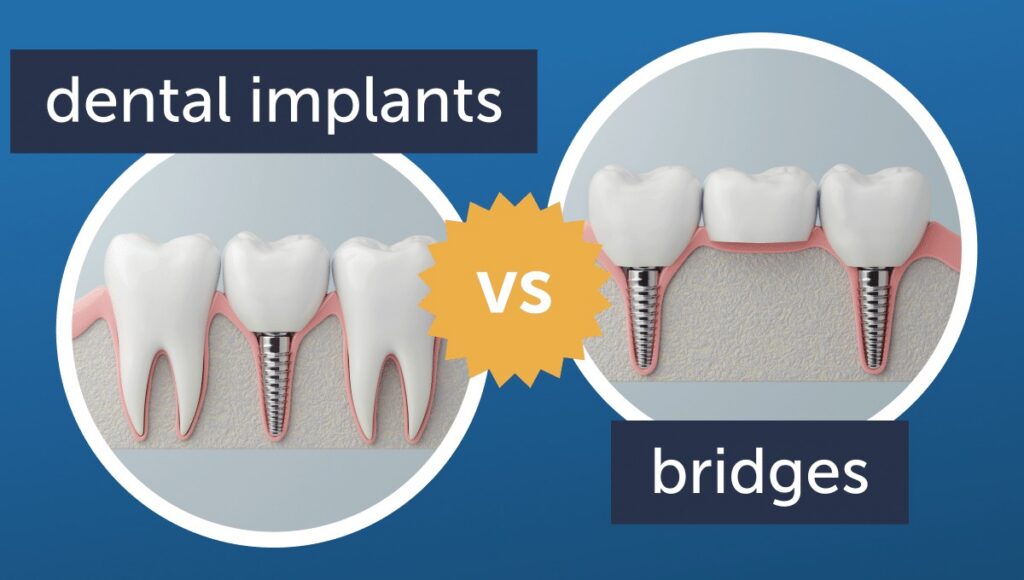
You have a missing tooth. Your dentist has given you two options. A dental implant or a dental bridge. Both will fill the gap. Both will restore your smile. Both work. So which one should you choose?
This is one of the most common questions patients ask when they lose a tooth. And it is a genuinely important one because the choice you make affects not just how your smile looks now but how your mouth holds up over the next ten, twenty, or thirty years.
The short answer is that for most patients, a dental implant is the better long-term solution. But the longer answer depends on your specific situation, and understanding why implants come out ahead in most cases, and when a bridge might still make sense, helps you walk into your consultation with a clear picture of what you actually need.
What Each Option Actually Is?
Before comparing them it helps to be clear about what each one involves.
A single tooth implant replaces a missing tooth from the root up. A small titanium post is placed directly into the jawbone. Over the following months it fuses with the bone through a process called osseointegration. Once healed a custom crown is attached on top. The result looks, feels, and functions like a natural tooth.
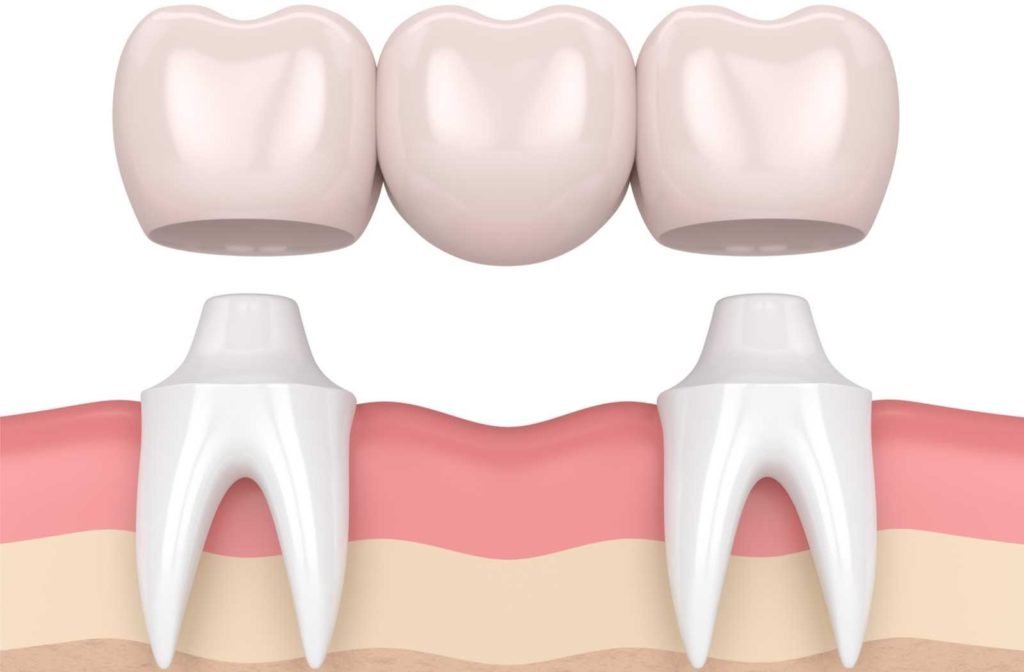
A dental bridge fills the gap by anchoring an artificial tooth to the two natural teeth on either side of the gap. Those neighboring teeth are permanently modified, ground down to act as supports for the bridge. The artificial tooth in the middle is held in place by the two crowns that cap the adjacent teeth.
Both options close the gap. But how they do it, and what happens to your mouth over time as a result, is very different.
For patients across Agoura Hills, Calabasas, Westlake Village, Thousand Oaks, Oak Park, Hidden Hills, Newbury Park, Bell Canyon, and Lake Sherwood, understanding the real differences between these two options is what makes the decision clearer. And for most of them, ` represent the stronger long-term investment for reasons that go well beyond appearance.
The Jawbone Issue Nobody Talks About Enough
This is the most important difference between implants and bridges, and it is the one that gets talked about least in casual conversations about tooth replacement.
When a natural tooth is lost the jawbone beneath it starts to shrink. The bone exists to support the tooth root. When the root is gone the bone has no reason to maintain its density. It gradually resorbs.
A bridge does nothing to stop this. The artificial tooth in the middle of a bridge sits above the gum rather than in it. There is no root, no stimulation to the bone. The bone underneath continues to resorb over the years while the bridge sits on top, completely unaware.
A dental implant directly addresses this. The titanium post acts as an artificial root, transmitting the pressure of biting and chewing into the bone exactly the way a natural tooth would. This stimulation maintains bone density and prevents the progressive jawbone loss that follows tooth extraction.
Over ten or twenty years this difference is visible. Patients who replaced a tooth with a bridge often notice changes in the appearance of that area of their face as bone loss progresses. Patients who chose an implant maintain the natural contour of the jaw and face in that area.

What Happens to the Neighboring Teeth?
This is the second major difference and another one that matters enormously over time.
To place a bridge your dentist has to grind down the two healthy teeth on either side of the gap. These teeth are permanently altered to act as supports. They lose natural tooth structure they will never get back. They are now covered by crowns and bear the additional load of supporting the artificial tooth in between.
Over time those neighboring teeth can develop problems. The extra load increases wear. The crowns covering them can fail. The teeth beneath can develop decay or need root canal treatment. Every issue that develops in a supporting tooth affects the entire bridge.
An implant does none of this. It stands alone. The neighboring teeth are not touched. They are not ground down. They are not modified in any way. They continue to function exactly as they did before the missing tooth was replaced.
For patients who have healthy teeth on either side of a gap, protecting those teeth by choosing an implant rather than a bridge is one of the clearest arguments for the implant option.
How Long Each Option Lasts?
This is where the long-term comparison becomes particularly clear.
Dental bridges typically last ten to fifteen years before they need replacement. The crown on one of the supporting teeth may fail. The bridge itself may fracture. Decay may develop at the margins. Over a lifetime of dental care a patient who chooses a bridge for a tooth lost in their thirties may end up replacing that bridge two or three times.
A dental implant, when properly placed and cared for, can last decades. Many patients keep their implants for a lifetime, with only the crown on top potentially needing replacement after many years of normal wear. When you factor in the long-term cost of replacing a bridge multiple times versus the one-time investment of an implant, the financial picture shifts significantly.
When a Bridge Might Still Make Sense?
It would be unfair to suggest implants are the right answer for absolutely everyone. There are situations where a bridge is a more appropriate choice.
Here are the main ones:
- Insufficient bone density: If significant bone loss has already occurred at the implant site, placing an implant may require bone grafting | New Window first, which adds time and cost to the treatment. For some patients a bridge is a more straightforward option depending on the degree of bone loss
- Adjacent teeth already need crowns: If the teeth on either side of the gap already have significant damage or existing large restorations that will eventually need crowning anyway, a bridge may not involve as much additional sacrifice of tooth structure
- Faster treatment timeline: A bridge can be completed in a matter of weeks. An implant takes several months from placement to final crown. For patients who need a faster solution, a bridge may be more practical depending on the situation
- Medical factors affecting healing: Certain medical conditions that significantly impair healing may affect implant candidacy, making a bridge the more appropriate clinical recommendation
Still Confused? Call Us Now
The Cost Conversation
Implants cost more upfront than bridges. That is simply true, and it is a factor patients need to consider honestly.
But the long-term cost calculation looks different. A bridge replaced two or three times over a patient’s life, with the associated costs of each replacement and the potential treatments needed for the supporting teeth over time, often adds up to more than the single investment of a well-placed implant.
Many practices offer patient financing options that spread the cost of implant treatment over time, making the upfront difference more manageable for patients who want the better long-term solution without paying everything at once.
Making the Right Decision for Your Situation
For most patients with a single missing tooth, good bone density, and healthy neighboring teeth, a dental implant is the better long-term fix. It preserves the jawbone, protects the surrounding teeth, lasts longer, and functions more like a natural tooth than any alternative available.
For patients where specific clinical factors make an implant less straightforward, a bridge remains a reliable and well-established solution that serves millions of patients well every year.
The right answer for your specific situation depends on your bone density, the health of your neighboring teeth, your timeline, your budget, and your long-term goals for your oral health. A thorough consultation gives you a clear recommendation based on your actual clinical picture rather than a generic answer.
