


Most people have at least one thing about their smile they wish they could change. For some, it is the color — years of coffee and tea that no whitening kit seems to fully fix. For others, it is the shape of a chipped tooth they have been covering with their hand in photos for years. And for many, it is simply a general dissatisfaction with how their smile looks overall, even when they cannot quite put their finger on exactly why.
Veneers have become one of the most sought-after cosmetic dental treatments worldwide for a simple reason — they can address multiple smile imperfections at the same time, often in as few as two dental visits, while delivering natural-looking results that can last for more than a decade. If you have been wondering whether veneers can help with your specific dental concerns, Porcelain veneers are a versatile solution used to correct a wide range of smile issues.
1. Tooth Staining That Whitening Cannot Fix
Professional teeth whitening treatments work well for surface staining, but they have real limitations when it comes to deeper, intrinsic discoloration. Staining caused by certain antibiotics, excessive fluoride exposure during childhood, or years of heavy coffee and red wine consumption can penetrate the enamel itself and simply cannot be lifted by bleaching alone — no matter how many times you try.
This is one of the most common reasons people explore veneers. Because a veneer covers the entire front surface of the tooth, it completely conceals even the most stubborn discoloration and replaces it with custom-shaded porcelain that matches the exact brightness and tone the patient wants. The added bonus is that porcelain is highly resistant to future staining, which means the result stays bright far longer than natural enamel typically would.
2. Chipped or Cracked Enamel
A chipped tooth is one of those things that seems minor until you cannot stop noticing it every time you look in the mirror. Whether it happened from biting into something hard, a small accident, or just wear over time, a chip changes the shape of a tooth in a way that is immediately visible — especially on the front teeth.
Veneers are a particularly clean solution for chips because they restore the tooth’s natural shape entirely rather than just filling the damaged area. The veneer covers the whole front surface and bonds permanently to the tooth, creating a smooth, strong, natural-looking result. For teeth with minor cracks, veneers also add a protective layer that helps prevent the crack from deepening or becoming a more serious structural issue over time.
3. Unwanted Gaps Between Teeth
Gaps between teeth — particularly the central gap between the two upper front teeth — are something many people feel genuinely self-conscious about, despite being completely harmless from a health perspective. Orthodontic treatment is one option for closing gaps, but it comes with a significant time commitment that not everyone wants to take on.
Veneers offer a much faster alternative. By carefully adjusting the width of the veneers placed on either side of the gap, a skilled cosmetic dentist can close the space completely in just two appointments. The result looks completely natural when it is done well — the key is precise, individual design for each veneer so that the proportions of the overall smile remain balanced and authentic.
4. Mildly Crooked or Overlapping Teeth
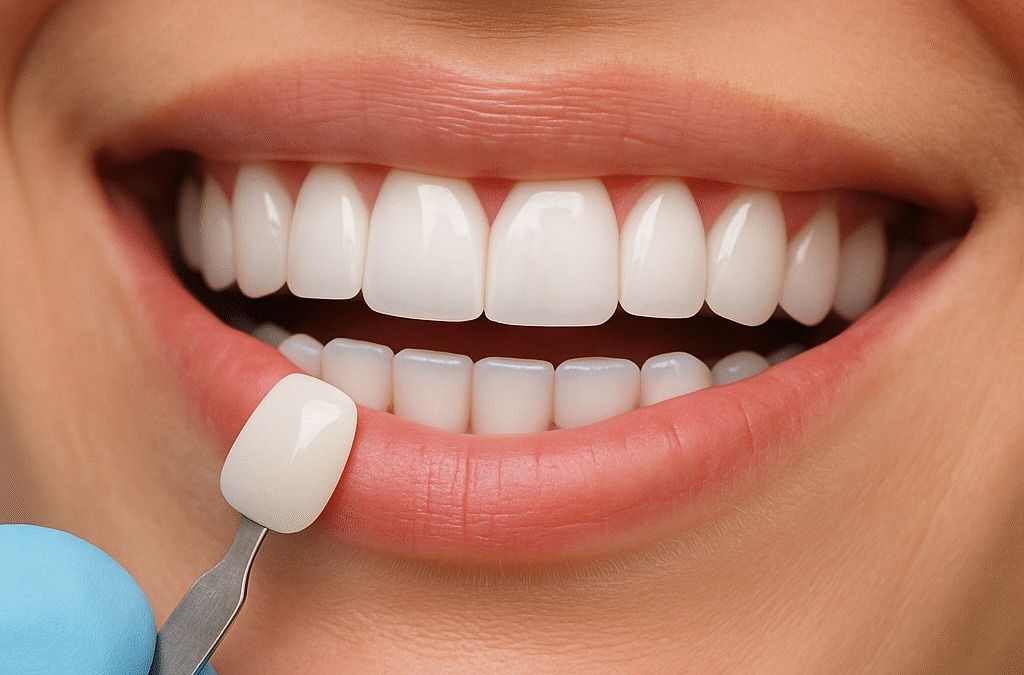
Veneers are not a substitute for orthodontic treatment in cases of significant misalignment — but for patients with mildly crooked, slightly overlapping, or subtly uneven teeth, they can create the appearance of a straight, symmetrical smile without moving the teeth at all.
This approach works because each veneer is designed individually in terms of shape, angle, and size. When placed correctly, the cumulative effect across a full set of veneers can make teeth that were previously irregular look perfectly aligned and proportionate. It is sometimes called cosmetic contouring or instant orthodontics, and it is particularly popular among adults who want a noticeable improvement quickly and without the commitment of wearing aligners or braces.
5. Teeth Worn Down by Grinding or Age
Teeth naturally wear down over time, and for patients who grind their teeth — a condition known as bruxism — that wear can happen significantly faster. Worn teeth look shorter, flatter, and older than healthy teeth, and they can affect the overall proportion and balance of the face in ways that go beyond just the smile itself.
Veneers restore the original length and shape of worn teeth, bringing back the natural proportions of the smile and giving the face a more youthful and refreshed appearance overall. It is worth noting that patients who grind their teeth will usually need to wear a nightguard after getting veneers to protect them from the same forces that damaged the natural enamel — something any good cosmetic dentist will address as part of the treatment planning process.
Ready to Transform Your Smile?
6. Naturally Small or Irregularly Shaped Teeth
Not all smile concerns are the result of damage or lifestyle habits. Some people are simply born with teeth that are naturally smaller, more rounded, or more irregularly shaped than the average, a condition that affects the overall balance and symmetry of the smile, regardless of how well they care for their teeth.
Peg laterals are a common example, where the upper lateral incisors are unusually small or cone-shaped, creating noticeable gaps and asymmetry on either side of the front teeth. Veneers are one of the most effective solutions for this kind of naturally occurring variation because they allow the size, shape, and proportion of each tooth to be redesigned from scratch, creating a balanced and harmonious smile that looks completely natural.
7. A Smile That Just Looks Dull and Lifeless
This one is harder to define than the others, but it is something a lot of people recognize immediately when they look at their own smile. There is no single broken tooth, no obvious gap, no glaring discoloration — just a general sense that the smile looks flat, tired, or less vibrant than it used to. Years of wear, aging, dietary habits, and gradual changes in tooth color and shape can combine to create this effect even when no individual tooth is technically damaged or unhealthy.
A complete set of custom veneers designed with careful attention to color, shape, size, and proportion can transform the overall quality of a smile entirely. This is what people often refer to as a smile makeover — and when it is done with a focus on natural aesthetics rather than an obviously artificial result, the transformation can be genuinely remarkable without ever looking like obvious dental work.
What to Think About Before Getting Veneers
Veneers are a permanent treatment — a small amount of enamel is removed during preparation, and that cannot be reversed. This is not a reason to avoid them, but it is a reason to go into the process with clear information and realistic expectations. The best outcomes happen when patients have an honest conversation with their dentist about what they want to achieve, understand both the porcelain and composite options available to them, and feel completely confident in their decision before any preparation work begins.
If you have been thinking about veneers for one or more of the concerns listed above, the most useful first step is simply a consultation with an experienced cosmetic dentist who will give you a straightforward, honest assessment of your specific situation and what veneers can realistically achieve for you.
Takeaway Message
Porcelain veneers are one of the most versatile tools in cosmetic dentistry — capable of addressing staining, chips, gaps, mild misalignment, worn teeth, irregular shapes, and overall smile dullness in a single treatment. They are not the right solution for every patient or every situation, but for those who are good candidates, the results are consistently natural-looking, long-lasting, and genuinely life-changing. Understanding what veneers can and cannot do is the first step toward making a confident, informed decision about your smile.
